Govanhill (A Case Study)
By Louise Devlin
History of Govanhill
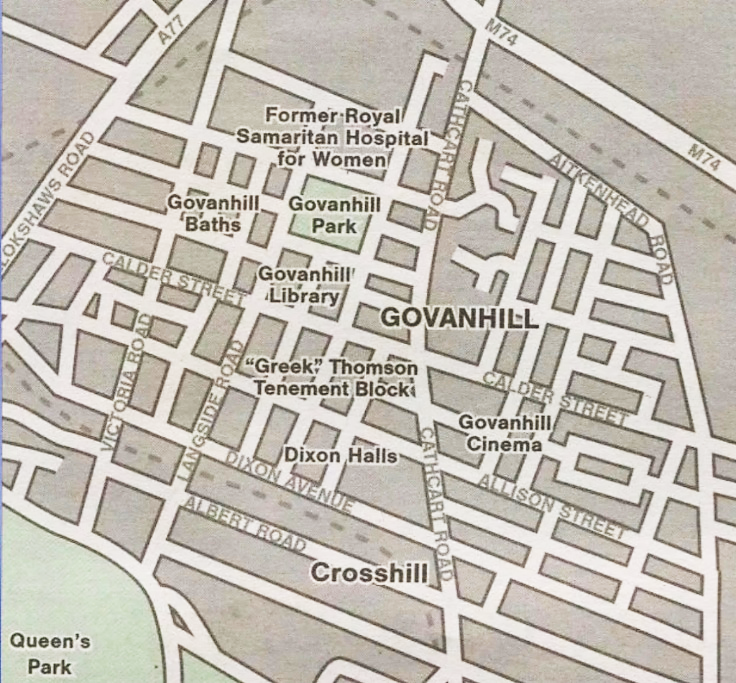
Govanhill is a neighbourhood in the southside of Glasgow. It is situated between Pollokshields, Polmadie, Crosshill, and the Gorbals. Govanhill is just under 200 years old and has historical links to coal mines and industrial works. In the early 1800s, there was a very affluent business-focussed family called the Dixons who owned a large Ironworks in Govan. William Dixon Jr expanded the family business to southside of Glasgow, where mining works were already established, and he introduced a new Ironworks industrial factory into the area. This area featuring the Ironworks is still known today as Dixon Blazes. It was given this name due to the glow from the furnaces that were used in the factories at that time.
Following this business expansion, the Govanhill neighbourhood was named and known as the ‘hill above little Govan’. The area initially began developing in 1839 with a several cottages that were built to house workers from the colliery. These were demolished eventually and it wasn’t until 1877 when the Govanhill area officially started taking shape. It started with the houses on Dixon Avenue and expanded to the tenement buildings throughout the area which still stand today. Some of the streets were named by William Dixon Jr after his daughters – Daisy Street and Annette Street.
Mining works were in place throughout Glasgow since the 1600s and in the late 1800s, tenements were built on top of the disused mines without substantial inspections and foundations were incorrectly constructed. This has led to serious structural issues throughout Glasgow, and specifically Govanhill in more recent years with urgent works being carried out to rectify the problems and stop further damage occurring.
A Brief History of Housing in Britain, 1800s – Present Day
A century ago, Housing Associations (HAs) did not exist in the UK, and the Private Rented Sector (PRS) was booming. Fast forward to 2024 and the tables have turned, the PRS has substantially declined, and social housing is one of the most popular tenures now in the UK. The standard of UK housing was also vastly different from as it is today. Many homes were known as slums due to their extremely poor conditions which were exacerbated by mass overcrowding and no sanitation. They led to highly contagious diseases such as Cholera which needlessly took the lives of many. The majority of working people at the time earned very low salaries which resulted in mass poverty.
In the 1960s and 1970s, slum clearance was a priority to improve the public’s home life and general health. The Tenement Improvement Project (TIP) was introduced to breathe new life into the tenements and save them from demolition. The TIP involved ASSIST Architecture, which is still in business today. The TIP aimed to save tenements from demolition by making improvements to properties – by for example installing internal bathrooms into flats in order to sustain the lifespan of the homes. Raymond Young writes in great detail about the TIP and the fight for indoor wc’s in his booked named ‘Annie’s Loo’. The book describes Annie Gibbons’ - an owner occupier from Luath Street in Govan - participation to be the debut internal bathroom installation in Glasgow funded by the TIP.
The TIP was a subsidised project provided by the local authority (LA) to benefit tenement owner occupiers initially. The installation of a bathroom involved building stud partitions usually in a kitchen recess and this would form a room to fit a wc, sink and bath. At that time, this generally cost around £700-800, however with the subsidy provided this meant owners could have this carried out for about £150-200 and aimed to extend the lifespan of the property for a further 15-20 years. However, although the subsidies reduced the cost significantly, the bathroom improvements were still unaffordable for many people.
In 1974, the Government transferred the responsibility for housing to LAs and grants became available to purchase and improve properties in communities. This was the start of social housing in Glasgow and Housing Associations were born. The first HA in Glasgow to be established was Govan HA and shortly after Govanhill HA was established. There are now 150 Housing Associations in Scotland with 68 of these based in Glasgow.
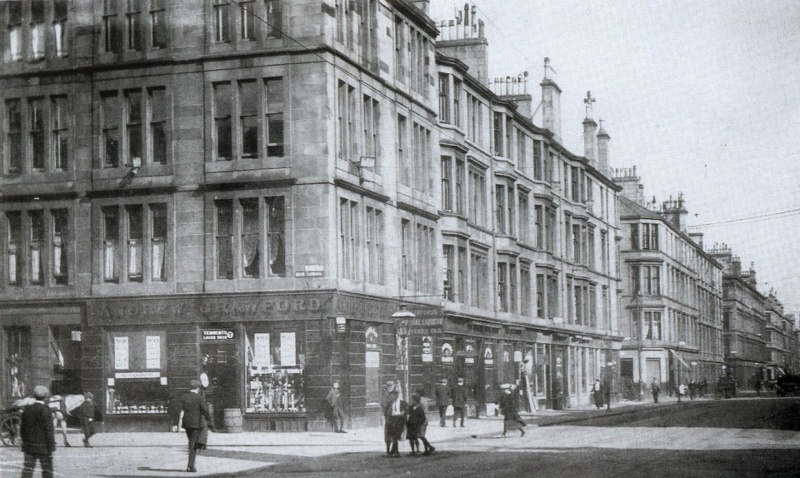
Allison Street, Govanhill (Source - caingram.info)
Community
The Govanhill neighbourhood is currently home to just over 14,000 people and has longstanding been a culturally diverse community. Starting with Scots from throughout the country moving to the area for industrial work. Then gradually throughout the years, the area has attracted people from all over including Ireland, Pakistan, Romania, and Slovakia.
Famous Faces
Govanhill has many connections to famous faces over the years. Starting with probably the most well know individual, Former First Minister, Nicola Sturgeon was responsible for Govanhill as her constituency from 2011 until 2023. She worked closely with Govanhill HA, local community groups and residents to resolve issues in the neighbourhood and to assist with making environmental improvements. She attended the opening for the new build block in Inglefield Street in 2018 and was impressed with the accommodation and the work the association had done.
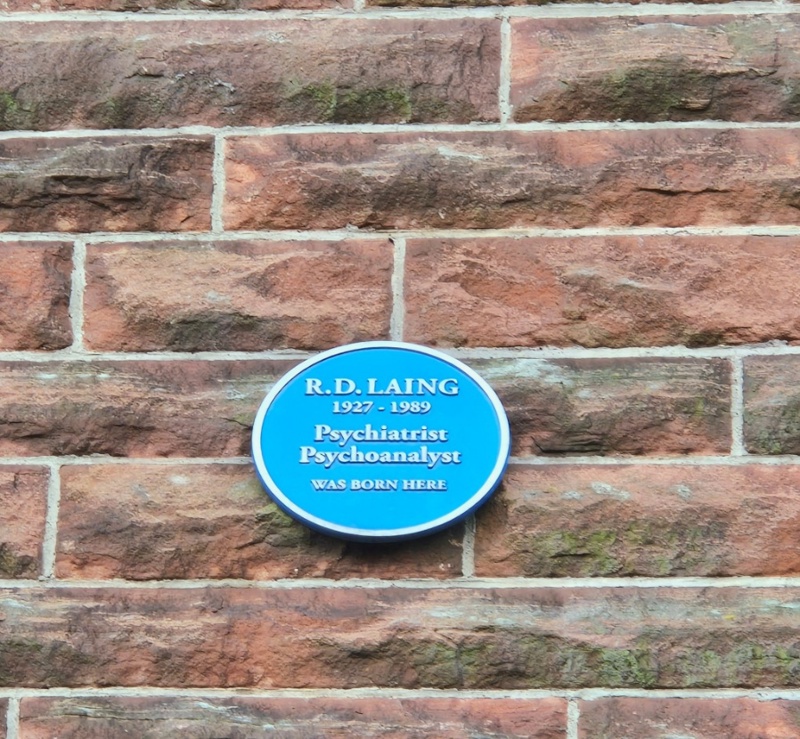
Ronald David Laing, known professionally as R.D. Laing, was a psychiatrist and author born in Govanhill in 1927. He grew up at 21 Ardbeg Street and there is a plaque above the front close door still there to this day in his honour. He studied at Glasgow University and as part of his studies he regularly visited Govanhill Library as it was just around the corner from his home. Laing’s work focused on mental illnesses in particularly schizophrenia and psychosis. He was against the traditional mental health treatments of the time such as lobotomies and worked endlessly to find new, successful treatments. In 2017, David Tennant portrayed Laing in a film entitled ‘Mad to be Normal’. The film tells the story of Laing’s life and describes his unusual methods and experiments used in treating his patients.
Govanhill has also been home to many footballers over the years including Harry Anderson, Jim Blyth, Bobby Collins, Chris McNee, and John McGeady.
Architecture
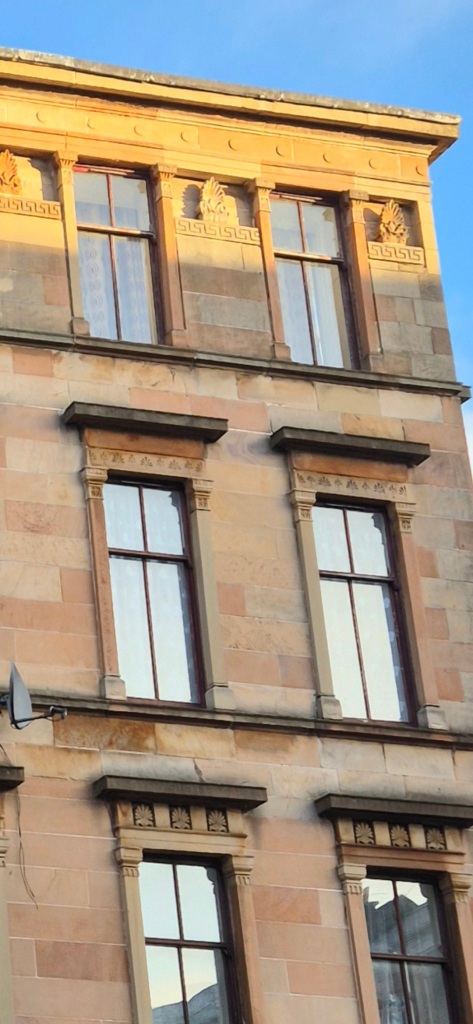
In Glasgow, it is often said that you should always take the time to look up at buildings when walking around the city as that’s where the detail is. The buildings in Govanhill are no different. The majority of the buildings are made from Victorian sandstone and have often discrete but distinctive features. Buildings constructed pre-1890s will feature blonde sandstone, whereas post 1890s buildings feature red sandstone. This is due to the stone supply being provided from different quarries.
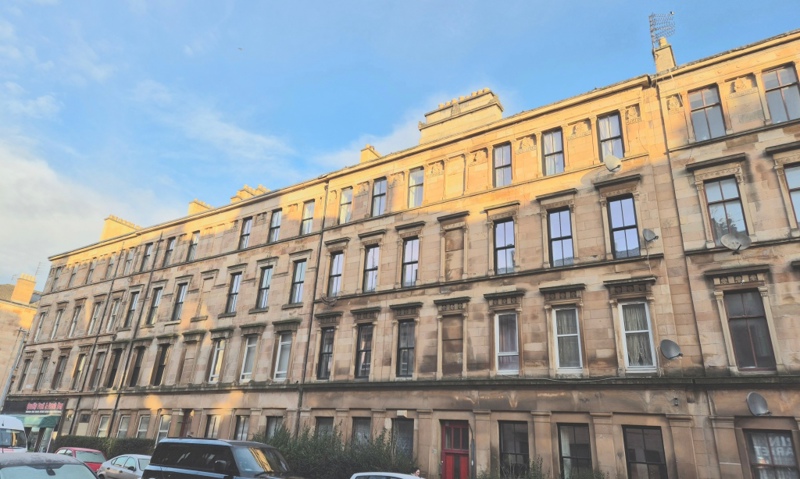
There are several buildings designed by architect – Alexander ‘Greek’ Thomson throughout Govanhill. The buildings from 19 Garturk Street round to Allison Street and round to 34 Daisy Street are great examples of his work locally.
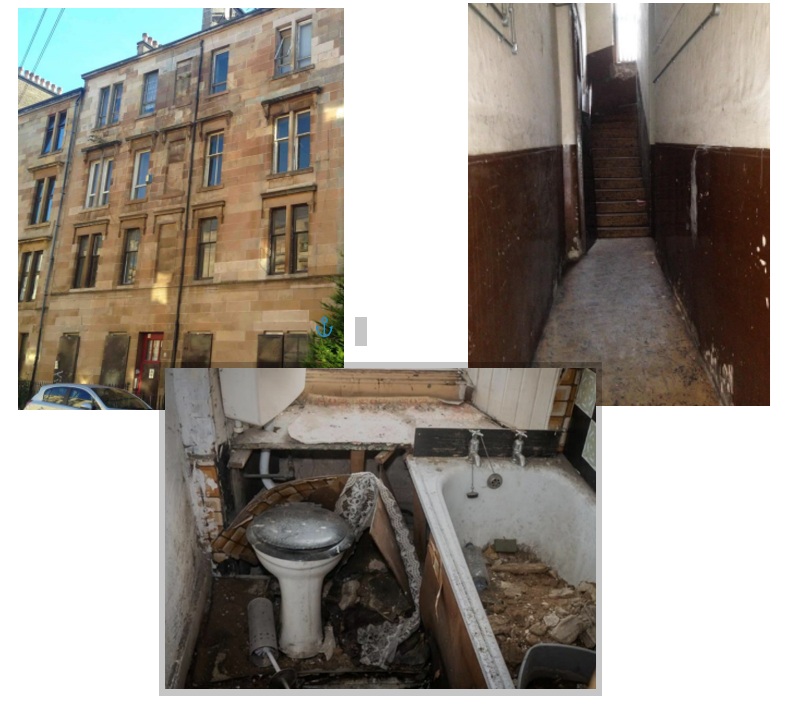
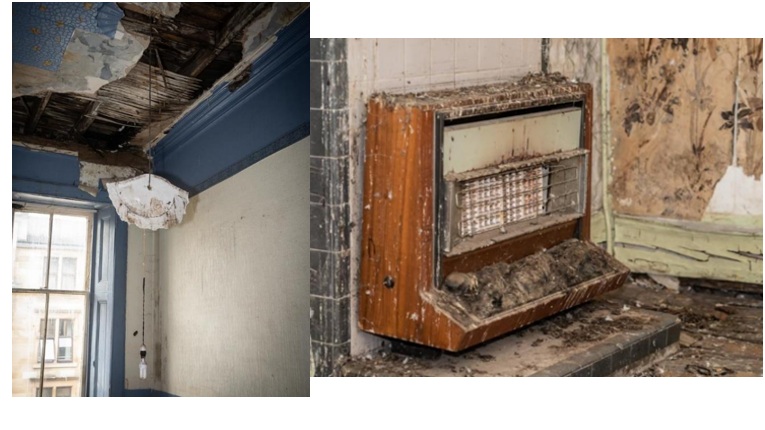
The close at 19 Garturk Street underwent a full refurbishment in recent years by Govanhill Housing Association as part of the ‘South West Acquisition & Repair Project”. The interior and exterior of the building was in extremely poor condition caused by years of neglect but it has now been restored to its former glory whilst maintaining original feature such as cornicing and ceiling roses. Prior to a refurbishment, there was severe rot throughout the building causing joists and beams to fail. A family pigeons had also ‘moved in’, causing mess throughout.
19 Garturk Street - Before
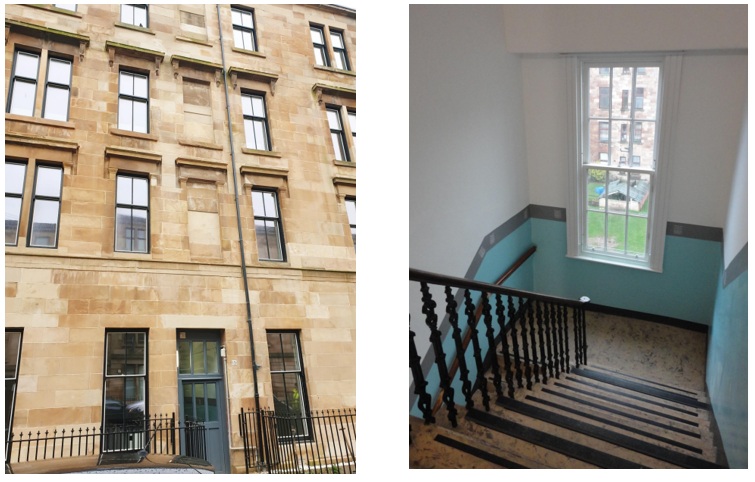
19 Garturk Street – After
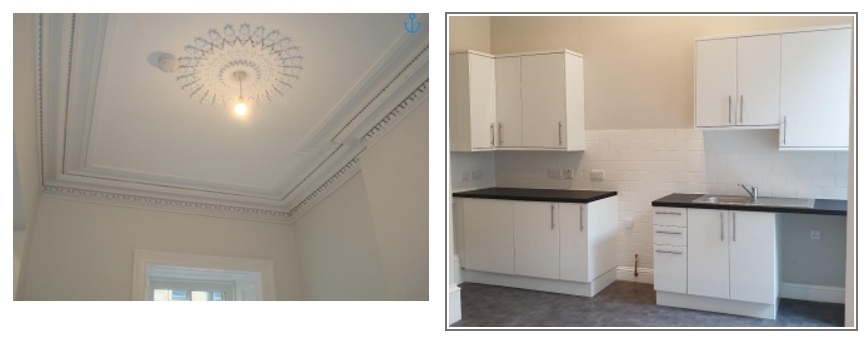
Source of all 19 Garturk Street photos - Govanhill HA
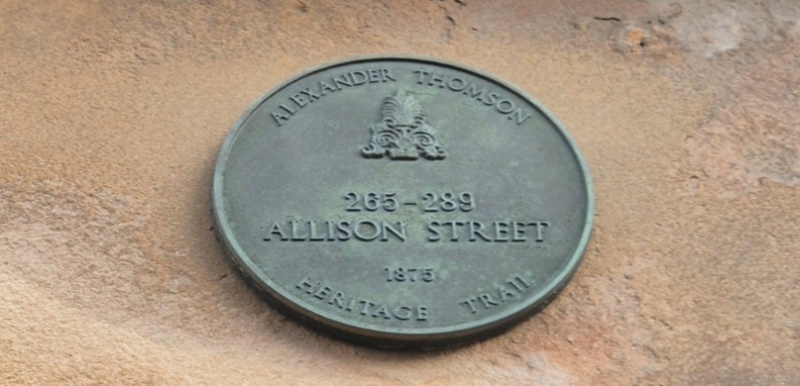
The facade of 273 - 289 Allison Street showcases some intricate, symmetrical motifs typical of Thomson’s style. He favoured the Anthemion pattern and reused this on many of his designs. Above the front door to the building at 289 Allison Street, there is a plaque fixed in his honour.
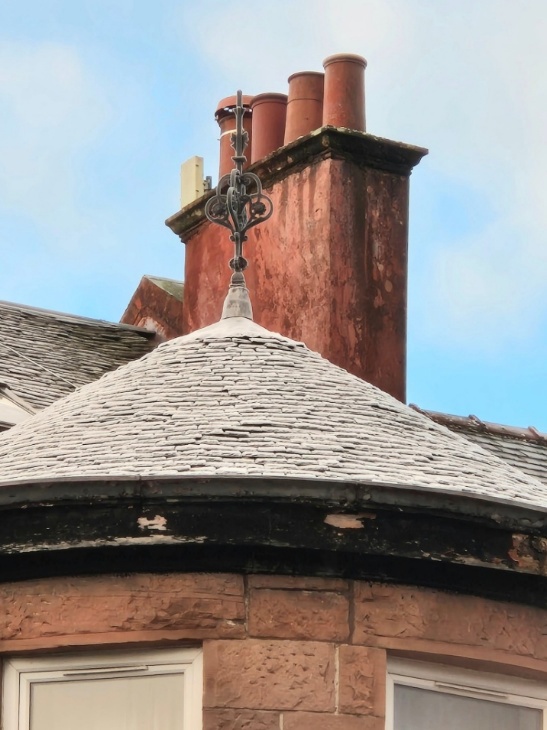
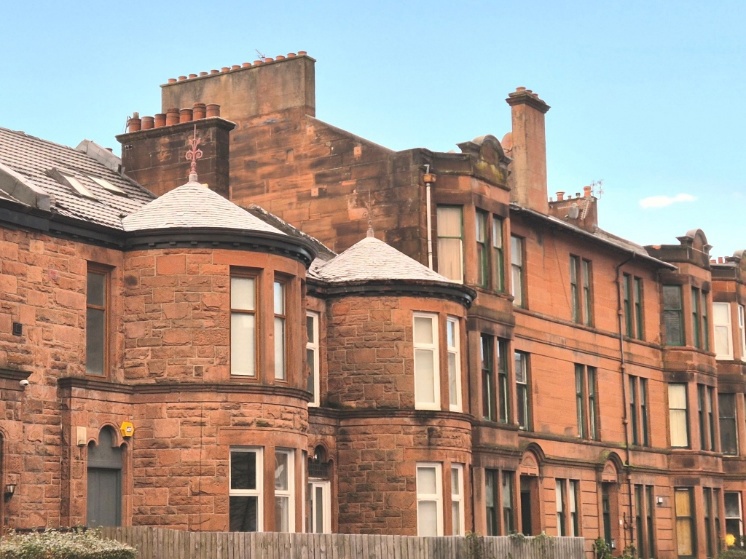
On the outskirts of Govanhill in Dixon Avenue, Architect Robert Duncan designed a row of elegant homes which feature elaborate curved bay windows with an iron spire on the roof top.
Govanhill Library
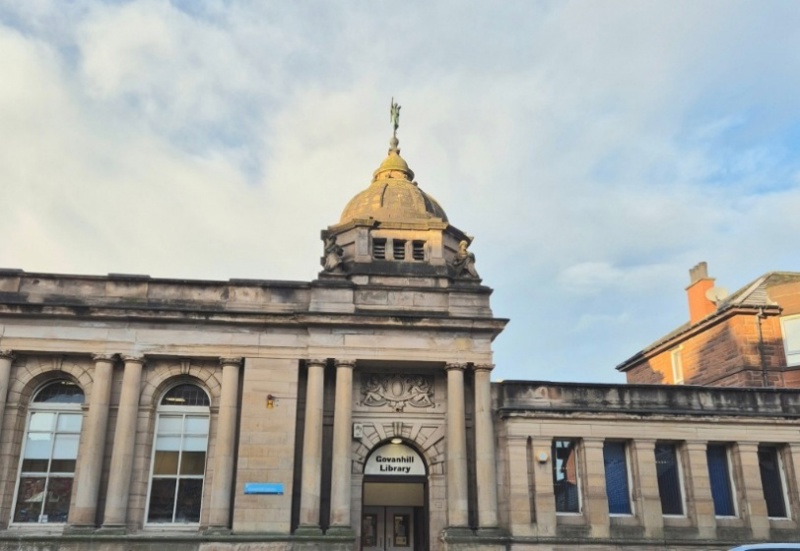
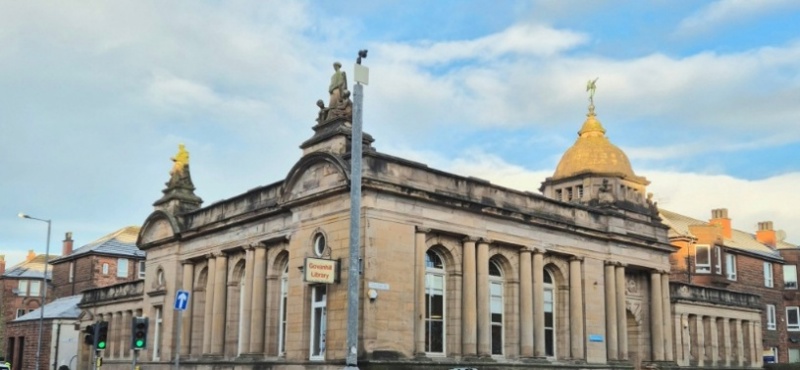
Opened in 1906, the Govanhill Library is situated on the corner of Langside Road and Calder Street. It is one of 12 libraries in Glasgow gifted £100,000 in 1901 from Andrew Carnegie – one of the richest Americans in history who made his fortune in the steel industry. The building was designed by architect James R. Rhind who favoured the Baroque style for the construction of the library. This included a large stone dome, vast traditional styled columns and monuments. Typically, of the time, there were separate rooms for girls and boys to be used for reading. The building initially had skylights throughout too, however these have since been removed. The drawing below was found on the Greater Govanhill website and shows the original layout of the library. This layout has unsurprisingly changed slightly over the years.
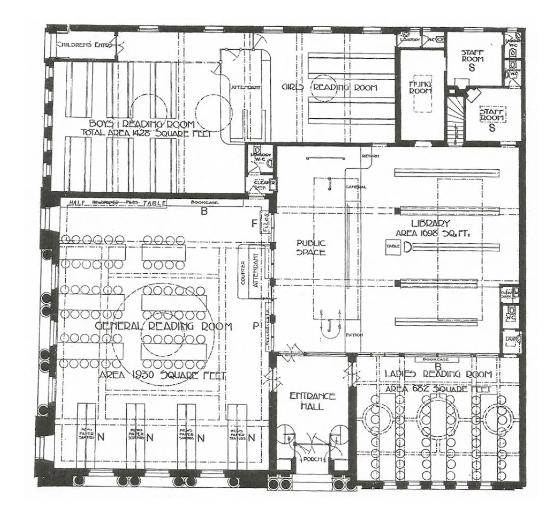
Source - Greater Govanhill
Govanhill Baths
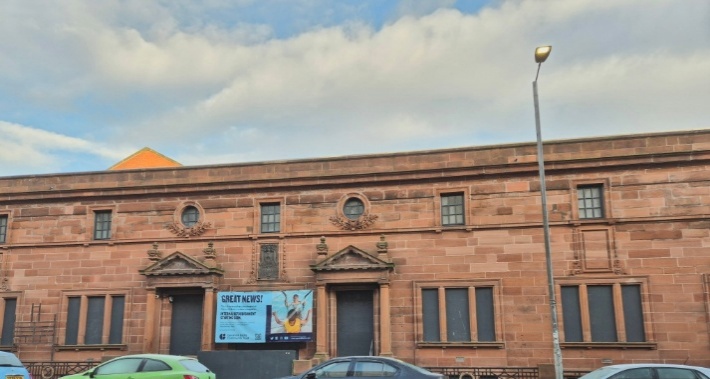
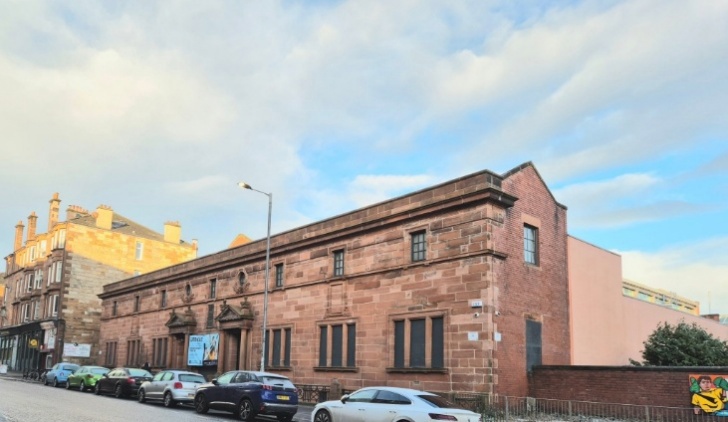
Situated at 99 Calder Street, the Govanhill Baths opened in 1912. The building was designed by architect A.B McDonald and is a Category B Listed Building. The building initially included hot baths on the upper floor, swimming pools on the ground floor and a ‘steamie’, later converted to a laundrette, at the rear of the building.
The Baths closed temporarily for refurbishment in 2001; however, it was since deemed too expensive. The closure resulted in a community protest occupying the building for almost 6 months - the longest occupation of a building in the UK's history. Following this, a public campaign began to raise money to reopen the Baths fully and is still ongoing to this day. A refurbishment of the external areas of the building was completed in 2023, however the full internal of the building is yet to be completed.
The History of Govanhill Housing Association
In 1974, a group Govanhill residents namely Joan Grant, Ann Scott and Joan Laing from the community came together to form the association. They were concerned about the extensive demolition of the tenement slums in the Gorbals in the 1960s and did not want Govanhill to fall to the same fate. Govanhill was mainly made up of blackened Victoria sandstone tenements, and they suffered from issues such as rot, structural problems, no hot water and no internal wc’s. Grant, Scott, and Laing began by holding meetings in each other’s homes and eventually formed the association in order to retain the traditional buildings and make improvements to people’s homes. Using grant funding, the first office was opened in 172 Butterbiggins Road and Laing became the first Chairperson of the Association. Later additions to the committee were Betty Stevenson and Lyn Ewing.
Ann Scott and Betty Stevenson spent their lives campaigning for better housing from the 1970s until they passed away subsequently in 2018 and 2009. Scott, was born in Westmoreland Street attended school in Govanhill, and lived in the Govanhill HA Sheltered Complex in her later years. Scott and Stevenson were active members of the Govanhill HA Committee and Stevenson was even awarded an MBE for her work. One of the new build blocks by Govanhill HA on Victoria Road has a plaque in dedication to Ann Scott. Betty Stevenson has also been recognised in the offices of EVH, who are an organisation who provide support to HAs, and has a room dedicated to her there.
The HA used the grants provided by Glasgow City Council to improve properties initially at 30 South Annandale Street. By 1979 they had improved their 500th home. In 1980, the Govanhill community campaigned for more funding and were successful. This led to their first set of adapted homes created which were suitable for people with disabilities in 1981 and in 1983 the first new build housing in 60 years was established in Govanhill Street by the Association.
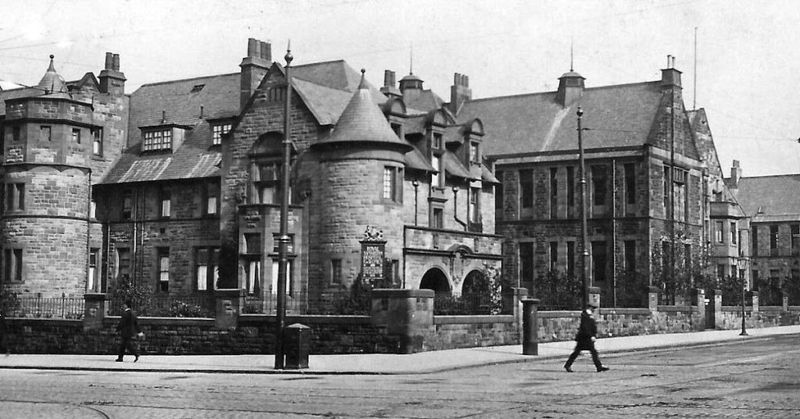
Samaritan House (Source - caingram.info)
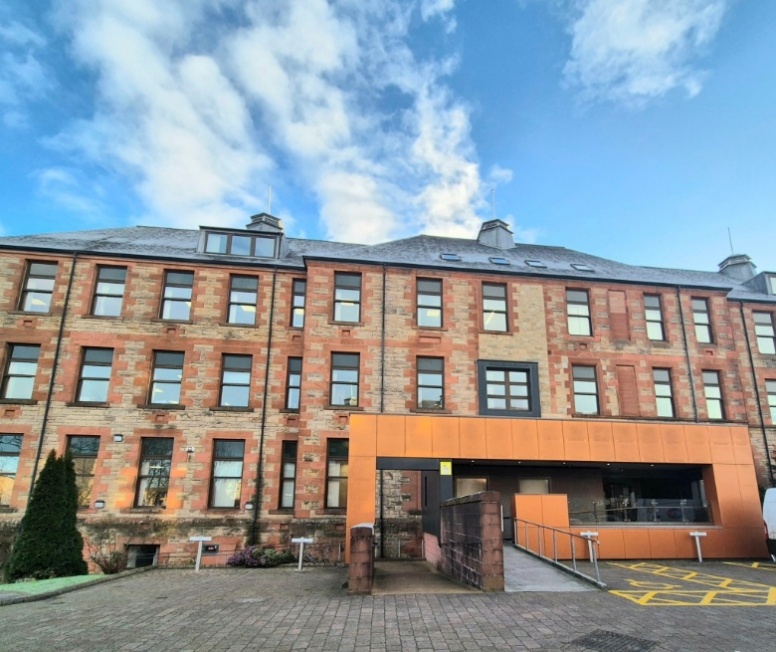
In 1995, Govanhill HA purchased Samaritan House at 79 Coplaw Street to be refurbished as their new office. It was built in 1896 and was previously used a Women’s Hospital. The hospital closed in 1991, and the building lay abandoned until acquired by the Association.
Due to funding limitations, the former hospital’s refurbishment was not completed until several years after the purchase and in 2006, the HA moved into the building which is still used as its office today.
HA Housing Stock
Govanhill HA own and rent out over 2,800 homes in Govanhill and Merrylee. The HA also factors around 1,500 privately owned properties. The majority of the stock is made up of Victoria sandstone tenements from 1 apartment to 5 apartment properties. There are also some houses and maisonette properties included in the stock. In 2011, a stock transfer took place from Glasgow HA (now known as Wheatley) to Govanhill HA. This involved transferring 700 homes in Govanhill and Merrylee.
South West Project
Spring 2015, saw the start of the ‘South West Govanhill Acquisition and Repair Programme’. The objective of the project was to improve specific blocks in Govanhill by purchasing properties from private landlords or owner occupiers, improving them then renting them out as social housing. The project had funding totalling £32.8m from the Scottish Government, Glasgow City Council and Govanhill HA. This funding was used to purchase properties and initially in a 4-block target area comprising of Annette Street Langside Road Westmoreland Street Calder Street Alison Street and Dixon Ave – blocks 5-8 on the map below. The target area then expanded to 18 blocks throughout Govanhill.
Following acquisition of a property, the association carried out the necessary repairs to bring it up to the lettable standard. Most properties required a full internal refurbishment with some requiring major structural or rot treatment works. Part of the project allowed common repairs to be carried out in several blocks which had been neglected for many years. These repairs included stonework improvements, roof and window replacements and internal decoration.
The project was completed in 2023 and was very successful in that it achieved its objectives and more. Over 400 properties were acquired and refurbished. These are now available to be rented as social housing. In addition, more than 80 blocks were taken on and are now factored by Govanhill HA.
Govanhill’s Future
Govanhill is currently home to just over 14,000 people. It had a moment in time not too long ago where the ambience was bleak and everything appeared to be falling apart – literally and metaphorically. However, with the improvements made in recent years by Govanhill HA and local community groups, Govanhill is once again thriving. The neighbourhood is beginning to rival the West End with its ‘hipster’ appearance in regard to the array of enterprising and fashionable cafes, bars, and shops.
There is still a lot of work to be done in Govanhill if only the funding could be allowed for this. But like all other areas throughout the country, the Scottish Government is unable to commit to any significant formal funding at the moment to continue to improve the existing tenement stock. The success of Govanhill HA’s Acquisition & Repair project proves what can be done with the right resources and investment.
The Scottish Government currently has a house building target to build 110,000 homes by 2032. As a result, the Association’s activities in the area continue to flourish with the completion of 3 new builds in recent years and another site where construction is underway.
References
greatergovanhill.com
bbc.co.uk
govanhillha.org
govanhill.info
scot.gov.uk
Smart, A (2001 ). Villages of Glasgow, Volume 2. John Donald Publishers Ltd, Edinburgh. Pages 101-117.
Young, R (2013). Annie's loo: the Govan origins of Scotland's community-based housing associations. Glendaruel, Argyll : Argyll Publishing.
Credits – Link: https://housing000.wordpress.com/about/
All photos have been taken by Louise Devlin unless otherwise stated in the caption provided.